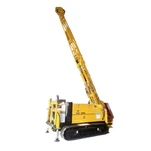
In global energy extraction and geological exploration, drill tools are core tools, and their logistics directly impact project efficiency and cost control. Drill tool logistics is not ordinary cargo transportation; it is a complex supply chain system that integrates professionalism, safety, and timeliness.
Physically, drill tools are generally large and heavy. A complete drill collar or drill pipe can be 9-12 meters long and weigh over 2 tons per piece. Some specialized products even require disassembly for transportation. This characteristic requires specialized lifting equipment in the logistics process, and ports and storage facilities must meet standards for handling out-of-gauge cargo. Regarding transportation methods, land transport requires the use of low-bed semi-trailers, while sea transport relies on open-top containers or flat rack containers. Air transport is only suitable for small, delicate components.
Different technical standards pose another major challenge. Different countries have adopted different versions of API standards, for example, API Spec 7-1 and ISO 11961 have different requirements for drill pipe thread parameters. Logistics service providers need to establish standardized inspection procedures and equip specialized tools such as torque wrenches during loading and unloading to ensure that torque values at joints meet engineering requirements. A European project experienced a 15% increase in transportation losses due to improper installation of thread protectors, highlighting the importance of standardized operations.
Time management directly impacts the operational continuity of drilling platforms. Offshore drilling platforms are typically designed for 24-hour continuous operation, with a single drilling tool replacement window of no more than four hours. This requires comprehensive control of the logistics process from door to wellhead, including seamless integration of customs clearance, port operations, and inland transportation. Data shows that adopting multimodal transport can reduce average delivery cycles by 30%, and real-time tracking using satellite positioning systems has become an industry standard.
The industry is currently moving towards intelligent upgrading. IoT sensors can monitor vibration, temperature, and humidity data in real time during transportation, and the application of blockchain technology in document circulation has increased customs clearance efficiency by 40%. As shale gas development expands into deepwater and polar regions, drilling tool logistics will face increasingly complex challenges, creating new value growth points for professional logistics service providers.