


Core Drilling Rigs
Core Drilling Rigs: Precision Engineered for Global Mineral Exploration
Designed for demanding hard-rock coring, mineral exploration, and geotechnical research.
Our drilling rigs combine high-torque hydraulic output with a rigid structural frame to ensure consistent penetration rates and maximum core recovery in the world’s most challenging geological environments.
-
 Hydraulic Portable Drill RigP8 series hydraulic portable drill rig combines the advantages of traditional hydraulic drilling rig with those of other lightweight drilling rigs on the market, offering modular portability whileAdd to Inquiry
 -
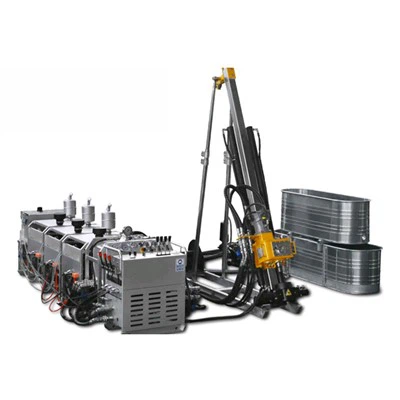 Hydraulic Portable Core Drilling RigP6 series hydraulic portable core drilling rig is designed for core exploration and construction across a variety of geological and landform environments. It is widely used in geological prospecting,Add to Inquiry
 -
 Hydraulic Portable Core Drill RigP5 series hydraulic portable core drill rig is a compact core drilling rig developed by ASDRILL specifically for field operations in cramped, unpowered locations and mobile environments. It utilizesAdd to Inquiry
 -
 Hydraulic Underground Drill RigBased on 20 years of field exploration experience, ASDRILL's X5 series hydraulic underground drill rig is a specialized core sampling device designed for enclosed and semi-enclosed spaces such asAdd to Inquiry
 -
 Hydraulic Underground Core Drilling RigX5 Series hydraulic underground core drilling rig is specifically engineered for underground 360° drilling operations, making it ideal for diamond core drilling and other advanced drilling works. TheAdd to Inquiry
 -
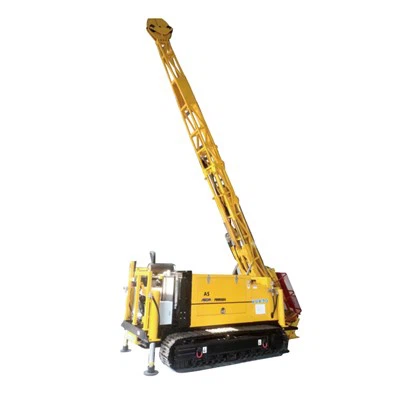 Hydraulic Surface Coring RigA5 fully hydraulic surface coring rig is specially designed for surface drilling operations. The remote-controlled crawler design facilitates equipment removal. The hydraulic core drilling rig adoptsAdd to Inquiry
 -
 Hydraulic Surface Core Drill RigA6 fully hydraulic surface core drill rig is specially designed for surface drilling operations. Its remote-controlled crawler design facilitates equipment movement. The hydraulic core drill rig usesAdd to Inquiry
 -
 Hydraulic Surface Core Drilling RigA8 hydraulic surface core drilling rig is specially designed for surface coring operations. Its remote-controlled crawler design facilitates equipment relocation. This hydraulic drilling rig usesAdd to Inquiry


Hard-Rock Power System
We utilize a variable-displacement piston pump paired with a high-torque reduction gearbox, rather than fixed-displacement drives, to maintain consistent torque at low RPMs.
Operational Performance: Engineered for rock formations with compressive strengths exceeding 150MPa (e.g., granite, basalt, quartzite).
Load-Sensing Technology: Automatically adjusts to load changes, preventing "stalling" or "stick-slip" phenomena.
Efficiency Metric: Delivers a 15–20% increase in penetration efficiency in high-strength rock compared to standard rigs, while reducing drill string vibration to extend bit lifespan.
Precision Hydraulic Feed System
Sample integrity is maintained through a high-precision hydraulic pressure feedback system.
Technical Detail: Provides granular, continuous feed pressure control to adapt to varying rock hardness, preventing micro-fractures in delicate samples.
Operational Advantage: Ensures core recovery rates remain above 95% while minimizing mechanical impact on the drill string and bits.


FEA-Optimized Structural Integrity
Main frames are constructed from high-yield-strength alloy steel, validated through Finite Element Analysis (FEA) under simulated field loads.
Design Logic: High-stress nodes (mast, sub-base) are reinforced and undergo stress-relief annealing after welding to prevent fatigue cracking.
Operational Advantage: Superior rigidity reduces drill-string chatter and borehole deviation, ensuring a longer service life in remote, harsh conditions.
Global Hydraulic Standards
All primary hydraulic components (e.g., Parker, Rexroth, or equivalent) meet international industrial standards, ensuring global availability of replacement parts and seamless maintenance.
Technical Configurations
|
Feature |
Specification Details |
|
Drilling Methods |
Diamond Wireline, Conventional Coring, Rotary |
|
Power Options |
Tier 3/4 Compliant Diesel Engines or High-Output Electric Motors |
|
Mounting |
Crawler-Track, Trailer-Mounted, or Skid-Mounted |
|
Compliance |
CE Certified (2006/42/EC), ISO 9001 Quality Management |
Operational & Maintenance Strategy
The company conducted a competitive advantage analysis to identify its strengths and weaknesses compared to its rivals.
Minimized Downtime
Modular component layout provides high accessibility. Routine maintenance and common fault diagnostics can be performed in the field without disassembling the main chassis.
Cost-Effective Maintenance
Standardized mechanical layouts allow for easy access. Parts are sourced from industry-standard catalogues to reduce inventory requirements.
Consistent Productivity
The constant-torque output ensures steady drilling speeds across varying lithologies, maximizing daily meterage.
Global Support
Full-service support including OEM/ODM manufacturing, technical documentation in multiple languages, export-grade protective packaging, and remote technical assistance.
6-Stage Quality Assurance Program
Every rig must pass these mandatory tests prior to shipment:
Structural Inspection
Non-destructive testing (NDT) on all critical welded joints.
Hydraulic Calibration
Pressure and flow output verification on an independent test bench.
Rotary Performance
Full-load testing of torque and rotational speed.
Feed System Load Test
Dynamic stability assessment under simulated operational loads.
8-Hour Operational Trial
Continuous, full-system functional stress test.
Pre-shipment Audit
Final check of control responses and safety interlocking circuits.
Customization Options
We offer comprehensive hardware customization, including depth upgrades (for deep-hole exploration >1,500m), rod-handling systems, mast height adjustments, OEM branding, and localized control interface configurations.
We're professional core drilling rigs manufacturers and suppliers in China, specialized in providing high quality custom service. We warmly welcome you to buy the best core drilling rigs for sale here from our factory. For price consultation, contact us.
