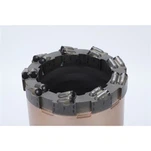
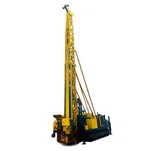
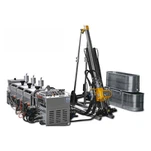
In recent years, with the deepening of global resource exploration and geological research, core drills, as key equipment, have played an irreplaceable role in energy development, mineral exploration, and scientific research. Their technological advancements and expanding application scope are driving the industry towards higher efficiency and intelligent development.
From a technical perspective, modern core drills have transcended the limitations of traditional mechanical structures, incorporating innovative technologies such as hydraulic drive, automated control, and remote monitoring. For example, some high-end models feature a modular design, allowing for rapid adjustment of drilling parameters to varying geological conditions, significantly improving operational efficiency. Furthermore, the introduction of digital technology enables the equipment to transmit drilling data in real time, helping engineers remotely optimize construction plans and reduce labor costs and safety risks.
In terms of application, demand for core drills is expanding beyond traditional mineral exploration to encompass a wider range of scenarios. In the energy industry, the development of unconventional resources such as shale gas and geothermal energy places higher demands on drilling precision, prompting equipment manufacturers to develop models with high torque and high stability. Furthermore, with increasing emphasis on groundwater resource protection worldwide, core drills are being widely used in hydrogeological surveys, precisely obtaining rock samples to analyze groundwater flow patterns.
Scientific research also plays a crucial role for core drills. Polar ice core drilling projects rely on specialized drills to extract ice cores thousands of meters deep in extreme environments, providing critical data for climate change research. Deep-sea hydrothermal vent exploration, on the other hand, requires high-pressure technology to help scientists explore seafloor ecosystems. These cutting-edge applications not only validate the technical potential of core drills but also point the way for their future development.
Notably, increasing environmental protection requirements are driving industry change. The new generation of core drills reduces carbon emissions through optimized power systems and employs recyclable drilling fluids to mitigate pollution risks, aligning with global sustainable development trends. In the future, with the further integration of new materials and artificial intelligence technologies, core drills are expected to demonstrate their value in even more fields, providing even more powerful tools for human exploration of the Earth's depths.