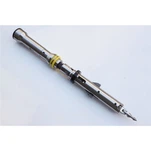
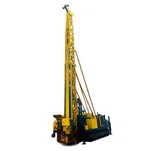
In geological exploration and resource extraction, core drills are essential equipment for obtaining underground rock samples. Different types of core drills differ in design, power, and application scenarios, suiting different geological conditions and exploration needs. Understanding these differences helps select the most suitable drilling equipment, improving operational efficiency and reducing costs.
Based on their power source, core drills are primarily categorized as hydraulic, electric, and pneumatic. Hydraulic drills are known for their powerful torque output and stability, making them suitable for deep-hole drilling in complex geological conditions. Electric drills, due to their environmental friendliness and low noise levels, are widely used in urban areas or noise-sensitive areas. Pneumatic drills rely on compressed air for power and have a relatively simple structure, making them commonly used for small-scale exploration projects or temporary operations.
Based on drilling depth and hole diameter, core drills can be categorized as light, medium, and heavy. Light drills are suitable for shallow exploration, have smaller hole diameters, are easy to transport, and are frequently used for preliminary mineral surveys. Medium drills offer greater flexibility in depth and hole diameter, meeting most geological exploration needs. Heavy-duty drill rigs are designed for deep drilling, capable of handling hard rock formations and requiring high-precision sampling. They are crucial equipment for large-scale resource development projects.
In addition, the core extraction method used by core drills also influences their application scenarios. Ropeline core drills extract cores using a rope, reducing the number of drill lifts and significantly improving operational efficiency, making them suitable for exploration in hard rock formations. Conventional core drills require frequent drill lifts and bit changes, making them suitable for soft rock or loose formations.
When selecting a core drill rig, the operating environment must also be considered. For example, extreme environments like deserts and polar regions require specialized designs that withstand high or low temperatures, while offshore drilling requires corrosion-resistant and stable reinforced structures. The geological characteristics of different regions also determine the suitability of the drill rig. For example, granite requires higher torque, while sedimentary rock formations prioritize penetration speed.
In short, the differences in core drill rig types directly impact exploration efficiency and costs. Understanding these differences helps select the optimal equipment for project needs and ensures smooth drilling operations.