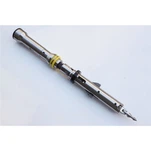
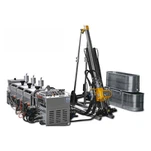
Core drilling rigs are key equipment in geological exploration, mineral resource development, and engineering geological surveys. They are categorized in various ways, with different types suited to different geological conditions and operational requirements. Understanding the classification of core drilling rigs helps companies accurately select equipment and improve exploration efficiency.
Based on drilling method, core drilling rigs are primarily divided into three types: rotary, percussive, and percussive-rotary. Rotary drills use a rotating drill bit to break rock and are suitable for soft to medium-hard formations, making them the most widely used type. Percussive drills use impact force to break rock and are suitable for hard rock or complex formations, but they are less efficient. Percussive-rotary drills combine the advantages of both, maintaining high efficiency even in hard rock and are widely used in deephole exploration.
Based on power source, core drilling rigs can be divided into three categories: electric, hydraulic, and pneumatic. Electric drills offer a simple structure and easy maintenance, making them suitable for areas with stable power supplies. Hydraulic drills are powerful and suitable for complex terrain and high-load operations. Pneumatic drills are primarily used in specialized environments like mines and rely on compressed air.
Based on portability, core drills can be categorized into three types: light, medium, and heavy. Light drills are easy to transport and suitable for small exploration projects. Medium drills balance portability and operational capacity, making them the preferred choice for most geological exploration projects. Heavy drills offer high power and excellent stability, making them suitable for deep or large-scale exploration projects.
Core drills can also be further categorized by application. In mineral exploration, high-precision, high-depth drills are often used. Engineering geological surveys prioritize the flexibility and adaptability of the drill. Hydrogeological exploration requires consideration of the drill's corrosion resistance.
With technological advancements, automation and intelligence are becoming the development trend for core drills. Some high-end equipment now enables remote control and real-time data analysis, significantly improving exploration efficiency and safety. In the future, core drilling rigs will develop in a more efficient and environmentally friendly direction to meet the world's growing demand for resource exploration.