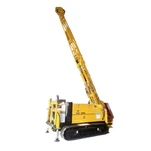
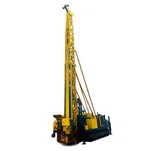
In modern industry, drill tools serve as critical tools for energy extraction, geological exploration, and infrastructure construction. Their technological advancements directly impact project efficiency and safety. With growing global energy demand and increasing exploration depths, drill tool design, materials, and intelligence are undergoing significant upgrades.
Core Types and Functions of Drill Tools
Drill tools vary widely and can be categorized by their intended use, including oil drill pipes, geological exploration drill bits, and mining rock drilling tools. Oil drill pipes, which must withstand high pressure and high temperature, are typically made of high-strength alloy steel and feature threaded connections to ensure a tight seal. Geological drill bits prioritize cutting efficiency, with the use of carbide inserts significantly enhancing rock-breaking capabilities. Furthermore, directional drilling tools, utilizing gyroscopes and hydraulic control systems for precise trajectory adjustment, have become essential equipment for drilling in complex formations.
Innovative Breakthroughs in Materials and Processes
Traditional drill tools were primarily made of carbon steel, while modern products widely utilize high-performance steels such as chromium-molybdenum alloys and nickel-based alloys, combined with heat treatment processes to enhance fatigue resistance. Surface coating technologies such as tungsten carbide spraying and plasma nitriding further extend drill tool life. Notably, 3D printing technology has begun to be applied to the rapid production of customized drill tool components, reducing the manufacturing costs of complex structures.
The trend toward intelligence is reshaping the industry landscape.
The integration of the Internet of Things and sensor technology has ushered in the era of intelligent drilling tools. Real-time data monitoring systems can track parameters such as drilling pressure, rotational speed, and temperature, using AI algorithms to predict equipment failures and optimize operating parameters. For example, automated steerable drills utilize machine learning models to dynamically adjust drilling angles, significantly improving the efficiency of deep well operations. Furthermore, the maturity of remote control technology allows engineers to monitor drilling progress from remote sites from a safe location.
Global Market and Sustainable Development Challenges
According to industry reports, the global drilling tool market is expected to maintain an annual growth rate of over 6% over the next five years, with the Asia-Pacific region being the primary growth driver due to energy infrastructure demand. However, stricter environmental regulations are driving manufacturers to develop recyclable materials and low-energy designs, such as using biodegradable drilling fluids to reduce formation contamination. This trend requires companies to balance technological innovation with ecological responsibility.
The evolution of drilling tool technology not only improves equipment performance but also serves as a key driver of global energy transformation and intelligent engineering. In the future, with the deep integration of new materials and digital technologies, drilling tools will demonstrate their irreplaceable value in a wider range of fields.