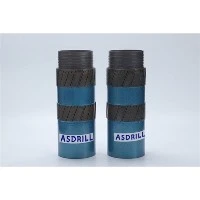
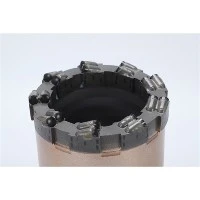
Hey there! As a supplier of Hydraulic Surface Coring Rigs, I often get asked about the best drill bits for these rigs. It's a crucial question because the right drill bit can make a huge difference in the efficiency and success of your coring operations. In this blog, I'll break down the different types of drill bits that are suitable for a Hydraulic Surface Coring Rig and explain when and why you might choose one over the other.


1. Diamond Drill Bits
Diamond drill bits are hands - down one of the most popular choices for Hydraulic Surface Coring Rigs. Why? Well, diamonds are the hardest natural material on Earth, which means they can cut through some seriously tough stuff. Whether you're dealing with granite, quartzite, or other hard rocks, diamond drill bits are up to the task.
There are two main types of diamond drill bits: impregnated and surface - set. Impregnated diamond drill bits have diamonds evenly distributed throughout the matrix of the bit. These are great for general coring in hard and abrasive formations. The diamonds are slowly exposed as the bit wears, providing a consistent cutting edge.
Surface - set diamond drill bits, on the other hand, have diamonds set on the surface of the bit. They're ideal for softer formations or when you need a more aggressive cutting action. The exposed diamonds can quickly penetrate the rock, making them a good choice for faster coring.
If you're interested in learning more about our Hydraulic Surface Core Drill Rig and how it works with diamond drill bits, check out our website.
2. Tungsten Carbide Drill Bits
Tungsten carbide drill bits are another option for Hydraulic Surface Coring Rigs. Tungsten carbide is a very hard and wear - resistant material, making it suitable for a variety of rock types. These bits are often used in softer to medium - hard formations, like limestone, sandstone, and shale.
One of the advantages of tungsten carbide drill bits is their cost - effectiveness. They're generally less expensive than diamond drill bits, which can be a big plus if you're on a budget. However, they may not last as long as diamond bits, especially in very hard rocks.
Tungsten carbide drill bits come in different shapes and configurations. Some have a straight - flute design, which is good for general coring. Others have a spiral - flute design, which can help with the removal of cuttings from the borehole.
3. PDC (Polycrystalline Diamond Compact) Drill Bits
PDC drill bits are a relatively new addition to the world of coring. They combine the hardness of diamonds with the durability of tungsten carbide. PDC bits have a layer of polycrystalline diamond on the cutting surface, which provides excellent cutting performance.
These bits are great for a wide range of formations, from soft to hard. They can cut through rock quickly and efficiently, and they also have a long lifespan. However, PDC drill bits can be quite expensive, so they may not be the best choice for every project.
If you're considering using PDC drill bits with our Hydraulic Surface Coring Rig, we can provide you with more information on their performance and cost.
4. Matrix Drill Bits
Matrix drill bits are made from a mixture of metal powders and diamonds or other abrasive materials. The matrix acts as a binder, holding the abrasive particles in place. These bits are often used in hard and abrasive formations, where they can provide a consistent cutting action.
Matrix drill bits are known for their durability and ability to withstand high temperatures. They can also be customized to suit specific drilling conditions. For example, you can choose a matrix with a different hardness or a different diamond concentration depending on the type of rock you're drilling.
Factors to Consider When Choosing Drill Bits
When choosing drill bits for your Hydraulic Surface Coring Rig, there are several factors you need to consider:
- Rock Type: As I mentioned earlier, different drill bits are better suited for different rock types. Hard rocks like granite and quartzite require diamond or PDC drill bits, while softer rocks like limestone and shale can be drilled with tungsten carbide or matrix drill bits.
- Drilling Depth: The depth of your drilling can also affect your choice of drill bit. Deeper holes may require more durable drill bits that can withstand the increased pressure and temperature.
- Coring Speed: If you need to core quickly, you'll want to choose a drill bit that can provide a fast cutting action. Diamond and PDC drill bits are usually the best choice for high - speed coring.
- Budget: Cost is always a factor when choosing drill bits. Diamond and PDC drill bits are generally more expensive than tungsten carbide and matrix drill bits. You'll need to balance your budget with the performance requirements of your project.
Conclusion
Choosing the right drill bits for your Hydraulic Surface Core Drilling Rig is essential for a successful coring operation. Whether you're dealing with hard rocks or soft formations, there's a drill bit out there that's right for you. By considering factors like rock type, drilling depth, coring speed, and budget, you can make an informed decision and get the most out of your Hydraulic Surface Coring Rig.
If you have any questions about our Hydraulic Surface Coring Rigs or the drill bits we recommend, don't hesitate to reach out. We're here to help you find the best solutions for your coring needs. Contact us today to start a discussion about your project and see how we can assist you in achieving your goals.