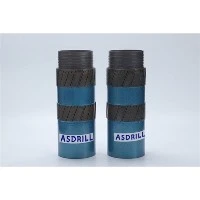
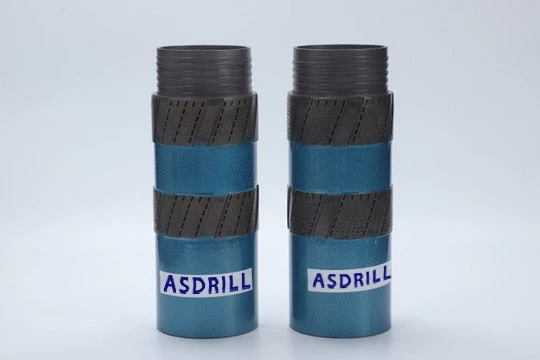
Hey there! As a supplier of Reaming Shells, I've been getting a lot of questions lately about the vibration characteristics of a reaming shell during operation. So, I thought I'd take a moment to break it down for you.
First off, let's talk about what a reaming shell is. A Reaming Shell is a crucial tool in core drilling operations. It's used to maintain the diameter of the borehole and ensure that it stays straight and smooth. This helps in getting high - quality core samples and also extends the life of other drilling tools.
Now, when a reaming shell is in operation, vibration is an inevitable phenomenon. But understanding its characteristics is key to optimizing the drilling process.
Frequency of Vibration
The frequency of vibration of a reaming shell is closely related to the rotational speed of the drilling equipment. As the drilling rig rotates the drill string, which includes the reaming shell, the reaming shell experiences different forces that cause it to vibrate. Usually, the higher the rotational speed, the higher the frequency of vibration.
Let's say you are using a standard drilling rig with a rotational speed of around 200 - 300 RPM. At this speed, the reaming shell will experience a relatively low - frequency vibration. On the other hand, if you crank up the speed to 500 - 600 RPM or even higher in some high - performance drilling operations, the vibration frequency can increase significantly.
This frequency can have a big impact on the performance of the reaming shell. Low - frequency vibrations might cause the reaming shell to move in a more sluggish way, potentially resulting in uneven wear on the cutting surface. High - frequency vibrations, on the contrary, can lead to more rapid wear and tear and may even cause damage to the connections between the reaming shell and the drill string.
Amplitude of Vibration
The amplitude of vibration refers to the maximum displacement of the reaming shell from its equilibrium position. It is affected by several factors. One of the main factors is the properties of the rock or soil being drilled. If you're drilling through hard and abrasive rocks like granite, the reaming shell will experience larger - amplitude vibrations compared to when drilling through softer materials like sandstone.
Another factor is the design and condition of the reaming shell itself. A well - designed reaming shell with proper weight distribution and a high - quality cutting structure will tend to have a lower amplitude of vibration. For example, a reaming shell with a balanced diamond matrix in its cutting section is more likely to have a stable and lower - amplitude vibration during operation.
Excessive amplitude can cause a range of problems. It can lead to the reaming shell bouncing off the borehole wall, causing poor hole quality. It can also increase the stress on the drill string, potentially leading to fatigue failure of the components.
Direction of Vibration
The direction of vibration of a reaming shell is also an important characteristic. There are generally three main directions: axial, radial, and torsional.
Axial vibration occurs along the axis of the drill string. This type of vibration is often caused by the up - and - down movement of the drill bit as it cuts through the rock. Axial vibrations can affect the penetration rate of the drilling and the stability of the core sample collection. If the axial vibration is too strong, it can cause the core to break or become dislodged from the Core Barrel System.
Radial vibration is perpendicular to the axis of the drill string. It can be caused by uneven cutting forces on the reaming shell. For instance, if one side of the reaming shell encounters a harder rock formation than the other, it will result in a radial force that causes the reaming shell to vibrate in the radial direction. Radial vibrations can lead to an enlarged borehole diameter and poor hole straightness.
Torsional vibration is the twisting motion of the reaming shell around the drill string axis. This is mainly caused by the torque applied by the drilling rig. Torsional vibrations can cause problems in the connection between the reaming shell and the drill string. If the torsional vibration is too severe, it can lead to the loosening or breakage of the threaded connections.
Impact on Other Drilling Tools
The vibration characteristics of a reaming shell don't just affect the reaming shell itself. They also have an impact on other drilling tools in the system.
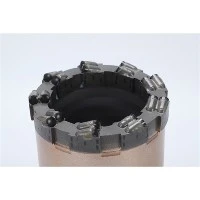
For example, the vibrations from the reaming shell can be transmitted to the Impregnated Diamond Bits or Impregnated Diamond Core Bits at the bottom of the drill string. Excessive vibrations can cause premature wear of these bits, reducing their cutting efficiency and lifespan.
The TSP Bits are also affected. The vibration can cause the TSP (Thermally Stable Polycrystalline) inserts on the bits to experience stress, which may lead to cracking or chipping of the inserts.
How to Control Vibration
Controlling the vibration of the reaming shell is essential for a successful drilling operation. One way is to adjust the drilling parameters. By optimizing the rotational speed, feed rate, and weight on bit, you can reduce the vibration levels. For example, if you notice high - frequency vibrations, you might want to lower the rotational speed a bit.
Another method is to use proper shock - absorbing materials or devices in the drill string. These can help dampen the vibrations and reduce their impact on the tools.
Also, regular inspection and maintenance of the reaming shell are crucial. If you find any signs of wear or damage on the reaming shell, such as uneven cutting surface or loose connections, it's important to address them promptly. This can help keep the vibration characteristics in check.
Conclusion
In conclusion, understanding the vibration characteristics of a reaming shell during operation is vital for anyone involved in core drilling. The frequency, amplitude, and direction of vibration all play important roles in the performance of the reaming shell and other drilling tools.
As a Reaming Shell supplier, I'm always here to help you with any questions you may have about these tools. If you're looking to improve your drilling efficiency and get better results, it's worth taking the time to understand and manage the vibration of your reaming shell.
If you're in the market for high - quality Reaming Shells or other core - drilling tools, I'd love to have a chat with you. Whether you're a small - scale drilling contractor or a large - scale mining company, we've got the products and expertise to meet your needs. Reach out to us to start a conversation about your procurement requirements and let's work together to make your drilling operations more successful.