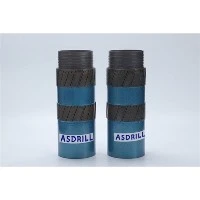
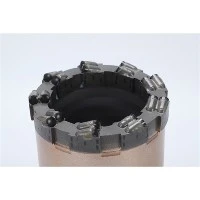
As a supplier of high - quality diamond bits, I've often encountered inquiries from clients about the power requirements for using these remarkable tools. Diamond bits are widely used in various industries, including mining, construction, and geological exploration, due to their exceptional hardness and cutting efficiency. Understanding the power requirements is crucial for achieving optimal performance and ensuring the longevity of the bits.
Factors Affecting Power Requirements
Rock Type
The type of rock being drilled is one of the most significant factors influencing the power needed for diamond bits. Different rocks have varying degrees of hardness, abrasiveness, and brittleness. For instance, granite is a hard and abrasive rock. When drilling granite, the diamond bit has to overcome the strong inter - granular bonds within the rock structure. This requires a relatively high amount of power to ensure that the diamonds on the bit can effectively cut through the material. On the other hand, softer rocks like limestone or shale demand less power as the bit can penetrate them more easily.
Bit Size
The size of the diamond bit also plays a vital role in determining power requirements. Larger bits have a greater cutting surface area. As a result, they need more power to rotate and advance through the rock. A large - diameter diamond bit used in mining operations, for example, may require a more powerful drilling rig compared to a smaller bit used for precision drilling in a construction project. The increased surface area means that more diamonds are in contact with the rock at any given time, and more force is needed to drive the bit forward.
Drilling Speed
The desired drilling speed is another factor. Faster drilling speeds generally require more power. When you try to drill at a high rate, the diamond bit has to remove more rock material per unit of time. This means that the diamonds need to cut through the rock more aggressively, which in turn demands additional power. However, it's important to note that extremely high - speed drilling can also cause excessive wear on the bit if the power is not properly managed.
Core Barrel System
The Core Barrel System used in conjunction with the diamond bit can impact power requirements. A well - designed core barrel system can reduce friction and improve the overall efficiency of the drilling process. For example, a core barrel with a smooth internal surface and proper fluid circulation can help the bit cut more smoothly, reducing the power needed to drive the bit. Conversely, a poorly maintained or inefficient core barrel system can increase resistance and require more power to achieve the same drilling results.
Calculating Power Requirements
Calculating the exact power requirements for using diamond bits is a complex process that typically involves a combination of theoretical calculations and practical experience. Engineers often use formulas based on the properties of the rock, the size and design of the bit, and the drilling parameters.
One common approach is to consider the torque and rotational speed of the drilling rig. Torque is the force that causes the bit to rotate, and rotational speed is the number of revolutions per minute (RPM). The power (P) required can be calculated using the formula (P=\frac{2\pi NT}{60}), where (N) is the rotational speed in RPM and (T) is the torque in Newton - meters.
However, this formula is a simplified representation, and in real - world scenarios, other factors such as the efficiency of the drilling rig, the presence of vibrations, and the quality of the drilling fluid also need to be taken into account.
Power Sources for Diamond Bit Drilling
Electric Motors
Electric motors are a popular choice for powering diamond bit drilling operations, especially in indoor or small - scale applications. They offer precise control over the rotational speed and torque, which is beneficial for achieving accurate drilling results. Electric motors are also relatively clean and quiet compared to other power sources. However, they require a reliable electrical supply, which may not be available in remote locations.
Diesel Engines
Diesel engines are commonly used in large - scale mining and construction projects. They provide high - power output and are suitable for heavy - duty drilling operations. Diesel engines can operate in remote areas where there is no access to electricity. However, they produce emissions and require regular maintenance to ensure optimal performance.
Hydraulic Systems
Hydraulic systems are often used in combination with drilling rigs. They can provide a high amount of power in a compact package. Hydraulic power allows for precise control of the drilling process, including the ability to adjust the pressure and flow rate. This makes them suitable for a wide range of applications, from small - scale precision drilling to large - scale mining operations.


Importance of Meeting Power Requirements
Meeting the appropriate power requirements is essential for several reasons. Firstly, it ensures the efficient operation of the diamond bit. When the bit has enough power, it can cut through the rock smoothly and at the desired speed. This reduces the time and cost of the drilling project.
Secondly, proper power supply helps to extend the lifespan of the diamond bit. Insufficient power can cause the bit to overheat and wear out prematurely. The diamonds on the bit may not be able to cut effectively, leading to increased friction and damage to the bit. On the other hand, excessive power can also cause damage, such as chipping or fracturing of the diamonds.
Case Studies
Mining Project
In a large - scale mining project, a mining company was using Impregnated Diamond Bits to drill through hard granite. Initially, they underestimated the power requirements and used a drilling rig with insufficient power. The drilling process was slow, and the bits were wearing out quickly. After consulting with our team, they upgraded to a more powerful diesel - powered drilling rig. The new rig provided the necessary torque and rotational speed, and the drilling speed increased significantly. The bits also lasted longer, reducing the overall cost of the project.
Construction Project
In a construction project, a contractor was using diamond bits for precision drilling in a concrete structure. They were using an electric motor - powered drilling rig. By carefully calculating the power requirements based on the bit size, the type of concrete, and the desired drilling speed, they were able to achieve accurate and efficient drilling results. The proper power supply ensured that the bits cut through the concrete smoothly without causing any damage to the surrounding structure.
Conclusion
In conclusion, understanding the power requirements for using diamond bits is crucial for successful drilling operations. Factors such as rock type, bit size, drilling speed, and the associated equipment all influence the amount of power needed. By carefully considering these factors and choosing the appropriate power source, users can ensure the efficient and long - lasting performance of their diamond bits.
If you are in the market for high - quality diamond bits and need assistance in determining the power requirements for your specific application, please feel free to contact us. Our team of experts is ready to provide you with the best solutions and support for your drilling needs. Whether you are involved in mining, construction, or geological exploration, we have the right diamond bits and knowledge to help you achieve your goals.
References
- ASTM International. (20XX). Standard test methods for evaluating the performance of diamond core bits.
- Smith, J. (20XX). Drilling technology: Principles and practices.
- Johnson, R. (20XX). Handbook of diamond tool applications.