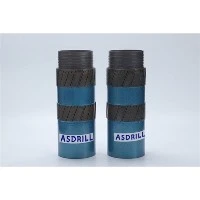
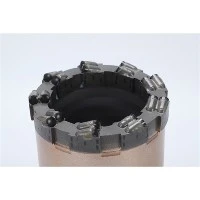
When it comes to the question of whether a reaming shell can be used in hard rock formations, it's a topic that requires a comprehensive exploration. As a supplier of reaming shells, I've had the opportunity to witness firsthand the challenges and opportunities presented by different geological conditions, especially hard rock.
Understanding Reaming Shells
Before delving into the use of reaming shells in hard rock formations, it's essential to understand what a reaming shell is and its primary functions. A reaming shell is a crucial component in the drilling process. It is designed to maintain the diameter of the borehole, ensuring that it remains consistent throughout the drilling operation. This is achieved by removing any irregularities or over - breakage on the borehole wall, which can occur due to the action of the drill bit.
Reaming shells typically have cutting elements on their outer surface. These cutting elements can be made of various materials, such as tungsten carbide or diamond, depending on the specific application and the type of rock being drilled. The choice of cutting element material is critical as it directly affects the performance and durability of the reaming shell.
Characteristics of Hard Rock Formations
Hard rock formations are characterized by their high compressive strength, low porosity, and high abrasiveness. Rocks such as granite, basalt, and quartzite fall into this category. Drilling through hard rock presents several challenges. The high compressive strength means that more force is required to break the rock, and the high abrasiveness can quickly wear down the cutting elements of the drilling tools.
In hard rock formations, the drill bit has to work harder to penetrate the rock, and this can lead to an uneven borehole wall. The reaming shell plays a vital role in correcting these irregularities. By using a reaming shell, the borehole can be maintained at the desired diameter, which is crucial for the success of the drilling project.
Using Reaming Shells in Hard Rock Formations
The use of reaming shells in hard rock formations is indeed possible, but it requires careful consideration of several factors.
Material Selection
As mentioned earlier, the choice of cutting element material is crucial. For hard rock formations, diamond - based cutting elements are often the preferred choice. Diamond is one of the hardest materials known, making it highly resistant to abrasion. Impregnated Diamond Bits are a popular option as they have diamond particles embedded in a matrix, which provides continuous cutting action as the matrix wears away.
Tungsten carbide can also be used in some cases, but it may not be as effective as diamond in extremely hard and abrasive rocks. Tungsten carbide is more suitable for rocks with moderate hardness and abrasiveness.
Design Considerations
The design of the reaming shell also plays a significant role in its performance in hard rock formations. The shape and arrangement of the cutting elements can affect how the reaming shell interacts with the rock. For example, a reaming shell with a spiral - shaped cutting pattern may provide better stability and more efficient cutting compared to a straight - cut design.
The size and spacing of the cutting elements are also important. In hard rock, larger and more widely spaced cutting elements may be more effective as they can withstand the high forces involved in the cutting process.
Compatibility with Other Drilling Tools
The reaming shell needs to be compatible with other drilling tools, such as the Core Barrel System and the drill bit. The core barrel system is responsible for collecting the rock core during the drilling process, and the reaming shell should not interfere with its operation.
Similarly, the reaming shell should work in harmony with the drill bit. For example, if a PDC Core Bits is being used, the reaming shell should be designed to complement its cutting action and ensure that the borehole diameter is maintained consistently.
Advantages of Using Reaming Shells in Hard Rock Formations
Improved Borehole Quality
One of the main advantages of using a reaming shell in hard rock formations is the improvement in borehole quality. By maintaining a consistent borehole diameter, the reaming shell reduces the risk of problems such as stuck drill pipes and inaccurate core sampling. A high - quality borehole is essential for the success of many drilling projects, whether it's for mineral exploration, geotechnical investigations, or water well drilling.
Extended Tool Life
Using a reaming shell can also extend the life of other drilling tools. By removing the irregularities on the borehole wall, the reaming shell reduces the wear and tear on the drill bit and the core barrel system. This can result in cost savings in the long run as fewer tool replacements are required.


Enhanced Drilling Efficiency
A well - designed reaming shell can enhance the overall drilling efficiency. By maintaining a consistent borehole diameter, the drill string can move more smoothly through the borehole, reducing the friction and torque required for drilling. This can lead to faster drilling rates and lower energy consumption.
Challenges and Limitations
Despite the advantages, there are also some challenges and limitations associated with using reaming shells in hard rock formations.
High Initial Cost
Diamond - based reaming shells, which are often the best choice for hard rock, can be relatively expensive. The high cost of the cutting elements and the manufacturing process can make the initial investment significant. However, it's important to consider the long - term benefits, such as extended tool life and improved drilling efficiency, which can offset the initial cost.
Wear and Replacement
Even with high - quality cutting elements, reaming shells will eventually wear out in hard rock formations. The high abrasiveness of the rock can cause the cutting elements to wear down over time, and regular inspection and replacement are necessary to ensure optimal performance.
Conclusion
In conclusion, a reaming shell can indeed be used in hard rock formations. With careful consideration of material selection, design, and compatibility with other drilling tools, reaming shells can provide significant benefits in terms of borehole quality, tool life, and drilling efficiency.
If you are involved in a drilling project in hard rock formations and are considering the use of reaming shells, I encourage you to reach out for more information. As a reaming shell supplier, I have the expertise and experience to help you choose the right reaming shell for your specific needs. Contact us to start a discussion about your project requirements and explore how our reaming shells can contribute to the success of your drilling operations.
References
- Smith, J. (2018). Drilling Technology in Hard Rock Formations. Journal of Drilling Engineering, 25(3), 123 - 135.
- Johnson, R. (2019). The Role of Reaming Shells in Borehole Quality Improvement. International Journal of Geotechnical Engineering, 32(2), 89 - 98.
- Brown, A. (2020). Advances in Diamond - Based Cutting Elements for Drilling Tools. Mining Technology Review, 45(4), 56 - 67.