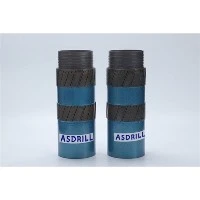
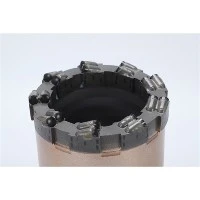
Hey there, folks! I'm a supplier of surface drilling rigs, and today I wanna chat about a pretty important topic in the drilling world: the difference between single - pass and multi - pass drilling with surface drilling rigs.
What is Single - Pass Drilling?
Single - pass drilling, as the name suggests, is a drilling method where the drilling rig tries to complete the hole in one go. That means no coming back to deepen or widen the hole later. It's like trying to dig a well straight down without stopping midway to make adjustments.
The advantage of single - pass drilling is its speed. When you can get the job done in one pass, you save a whole lot of time. There are no breaks in between to change bits or re - position the rig. It's particularly useful when you're dealing with relatively soft formations. For example, if you're drilling in sand or clay, the drill bit can cut through the material smoothly, and you can achieve your desired depth without any major hiccups.
We offer a Hydraulic Surface Core Drill Rig that's great for single - pass drilling. Its powerful hydraulic system allows it to penetrate through soft to medium - hard rock formations efficiently. With the right drill bits, this rig can make short work of single - pass drilling projects, whether it's for exploratory purposes or small - scale construction work.
However, single - pass drilling also has its limitations. If the rock formation is hard or has layers of different hardness, it can be a real challenge. The drill bit may wear out quickly, and you might encounter issues like getting stuck or not being able to reach the desired depth. In these cases, you might need to stop and change the drill bit or even use a different drilling technique.
What is Multi - Pass Drilling?
Multi - pass drilling is when you drill a hole in multiple stages. First, you start with a smaller diameter bit and drill to a certain depth. Then, you can either increase the diameter of the bit or drill deeper in subsequent passes.
One of the main benefits of multi - pass drilling is its flexibility. It's suitable for a wide range of rock formations, especially those that are hard or have complex layers. By starting with a smaller bit, you can break through the hard outer layers more easily. Then, as you progress, you can use larger bits to widen the hole. This method reduces the stress on the drill bit and the rig, which means less wear and tear.
Our Hydraulic Surface Core Drilling Rig is also well - suited for multi - pass drilling. Its adaptable design allows for easy bit changes, and the hydraulic system can be adjusted to handle different drilling pressures and speeds required for each pass.
But multi - pass drilling isn't without its drawbacks. It takes more time compared to single - pass drilling. Each pass requires time for setup, bit changes, and re - calibration of the rig. Also, there's a higher risk of the hole getting off - center, especially if the rig isn't properly aligned between passes.
Comparing the Two
When it comes to choosing between single - pass and multi - pass drilling, it really depends on the job at hand. If time is of the essence, and you're dealing with soft formations, single - pass drilling is the way to go. You can get in and out quickly, saving time and money on labor and equipment rental.
On the other hand, if you're facing hard or complex rock formations, multi - pass drilling is your best bet. It might take longer, but it reduces the risk of equipment failure and ensures a more accurate and efficient drilling process.
Let's take a real - world example. Imagine you're working on a construction project where you need to drill holes for foundation piles. If the soil at the site is mostly soft clay, you can use single - pass drilling with our Hydraulic Surface Coring Rig. You'll be able to drill the required holes in a short time, allowing the construction to proceed without delays.
But if the site has a layer of hard granite beneath the soil, multi - pass drilling becomes necessary. You can start with a small - diameter bit to penetrate the granite and then widen the hole in subsequent passes. This way, you'll avoid damaging the drill bit and ensure that the holes are deep and wide enough for the foundation piles.


Application in Different Industries
In the mining industry, single - pass drilling can be used for preliminary exploration in areas with soft overburden. It allows miners to quickly assess the presence of minerals in the upper layers. On the other hand, multi - pass drilling is essential for deeper exploration and extraction in hard rock mines.
In the construction industry, single - pass drilling is often used for smaller projects like installing utilities or small - scale foundations. Multi - pass drilling, however, is preferred for large - scale construction projects such as high - rise buildings or bridges, where the foundation needs to be strong and stable.
Why Choose Our Surface Drilling Rigs?
Our surface drilling rigs are designed to handle both single - pass and multi - pass drilling with ease. They're built with high - quality materials and advanced technology, ensuring reliability and efficiency. Whether you're a small - scale contractor or a large mining company, our rigs can meet your needs.
We also offer excellent customer support. Our team of experts can help you choose the right drilling method and equipment for your project. We can provide training on how to operate the rigs safely and effectively, and we're always available to answer any questions you might have.
Let's Talk Business
If you're in the market for a surface drilling rig, whether for single - pass or multi - pass drilling, we'd love to hear from you. We can provide you with detailed information about our products, offer competitive pricing, and even arrange for a demonstration if you'd like. So, don't hesitate to reach out and start a conversation. We're here to help you get the job done right.
References
- Drilling Techniques Handbook, 2022 Edition
- Journal of Geotechnical Engineering, Vol. 55, No. 3
- Mining Industry Best Practices Guide, 2023 Update